

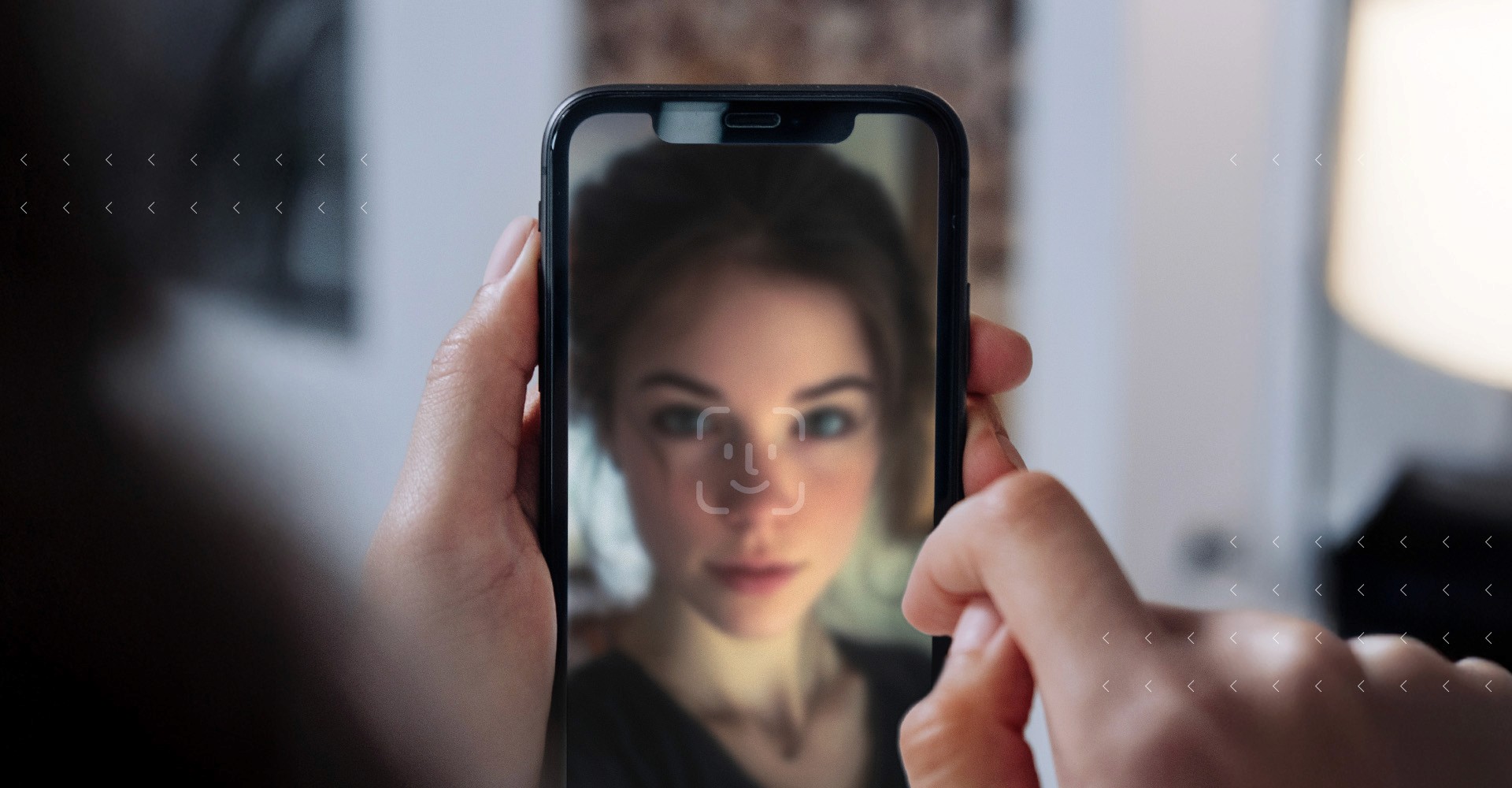
For years, due diligence teams have treated Companies House as a useful starting point, but rarely as something you could rely on with confidence.
It was a register you checked, not a dataset you trusted. That assumption is now being tested. Reforms under the Economic Crime and Corporate Transparency Act (ECCTA) are designed to strengthen register reliability and reduce corporate misuse.
The question for risk professionals is no longer "should we look at Companies House?", because everyone already does. The question is more practical: what can we do differently now that entity relationships on the public register are becoming more reliable?
Identity verification sits inside broader register reform
Companies House identity verification is part of wider reforms to improve UK corporate information integrity. The ECCTA expands Companies House powers and introduces measures to improve register quality.
Identity verification is, on the surface, a narrow change. From 18 November 2025, In-scope individuals such as directors and persons with significant control (PSC) must verify their identity and use a Companies House personal code to link their verified identity to company roles. Verification can be completed via GOV.UK One Login or via an Authorised Corporate Service Provider (ACSP).
That is the mechanics. The significance is what it changes about the data.
The trap: "verified" becoming a substitute for "vetted"
Here is the risk: better data can create false comfort.
Identity verification improves confidence that the link between a director and an entity is real. It does not tell you whether the director should be trusted, whether there is a conflict, or whether the founder's story holds up under pressure.
A verified individual can still present serious risk: a founder with a pattern of litigation, failed ventures, or adverse media; a director with undisclosed conflicts; a controller using nominee patterns where formal roles do not reflect real influence; or a track record narrative that is technically true but materially misleading.
This is where diligence often goes wrong. The register becomes the proxy for integrity because it is neat, official, and now "verified". The weighting of this data is increased and often overinflated, not assessing the value of the data as a whole. But regulators, lenders, and stakeholders care about something broader: whether your process was proportionate, consistent, and evidenced.
Stronger Companies House data does not necessarily strengthen your decision, but it should strengthen your data.
What identity verification really achieves: confidence in an entity relationship
Identity verification is not, by itself, "due diligence". It is not a judgement on integrity, a risk score, or an assessment of behaviour, reputation, or intent.
What it does do is strengthen the relationship between a person and a business on the public register.
That matters because due diligence work begins with entity relationships: who controls what, who has held positions of authority, which companies connect through shared directors or PSCs, and whether ownership or governance stories make sense when mapped over time.
Identity verification increases confidence that "Director A is Director A", and that the role connection to "Company B" is not just a self-asserted statement. It tightens the entity graph.
For an intelligence platform, this is a significant shift. YOONO relies on high-integrity data, such as Companies House relationships, as one of the anchors in its reporting logic. This is essential when assessing tens of thousands of records, building the complex web of linked entities and historical roles that underpin a person-level risk view.
These relationships are stored in a graph database: nodes and edges across people, companies, roles, dates, filings, and corroborating open source signals. When the register becomes more reliable at the relationship level, the downstream graph becomes cleaner, and the chance of identity drift reduces.
AI systems increasingly rely on graph databases because they can process relationships and context between data points far more effectively than traditional databases, enabling better pattern recognition and intelligence extraction.
Better data needs better tools
The practical issue is that a graph database in the real world would look like a room full of string, cork boards and post it notes. Without proper software tooling, these solutions cannot be applied at scale.
Most risk teams still rely on quick Companies House checks, internet searching under time pressure, fragmented notes, inconsistent escalation, and limited ability to reproduce results six months later.
This breaks in three ways: inconsistency (two teams reach different conclusions because they looked at different sources), non-repeatability (you cannot evidence what you checked at the time), and slow reaction (risk signals often appear after signing, not before).
Better Companies House data does not solve these operational issues, but it does raise the expectation that you can do better - as it should.
Two scenarios where better entity relationships still leave blind spots
Scenario 1: Verified link, hidden context
An investment team backs a founder-led UK services business. The founder is properly recorded and verified at Companies House. A month later, during lender diligence, questions arise about past business conduct and historic disputes.
The team can show Companies House extracts quickly, but that is not what the lender is really asking. They are asking what sits behind the person.
This is where YOONO supports the second layer: taking the stronger entity linkage as a foundation, then expanding into open source intelligence to identify litigation signals, adverse media patterns, controversial affiliations, and inconsistencies in professional history, with sources organised for evidence.
Scenario 2: Portfolio reality, relationship complexity
A platform investment completes bolt-ons across the UK and Europe. Several directors and PSCs sit across multiple entities, some with historic roles that overlap across portfolio companies, prior employers, and personal investment vehicles.
On a spreadsheet, it is chaos. Better Companies House relationship data helps, but only if you can operationalise it. YOONO's value here is turning a complicated relationship web into a repeatable structure, so the same person is assessed consistently across deals, onboarding events, and periodic reviews.
Where is the value?
For due diligence professionals, "value" is not about doing everything. It is about building a process you can defend.
Principles that hold up:
Separate identity confidence from integrity confidence. Treat Companies House identity verification as an entity relationship control, not as a reputation control.
Exploit the stronger relationship graph. Use tools to map roles, ownership, and cross-entity connections with more confidence, then widen out into external context.
Standardise minimum checks and escalation. Clear thresholds for when enhanced review is required.
Create evidence packs by default. Assume you will need to show the work later.
Make it repeatable across time. Deals end, teams change, and memories fade.
This is where YOONO fits naturally. YOONO benefits from improved Companies House relationship integrity as a stronger foundation for its graph structures, helping risk teams move from ad hoc research to consistent, evidence-based intelligence on founders, directors, and controllers.
Conclusion: PSC & UBO Verification Must Evolve
Director, PSC, and UBO checks sit at the centre of AML, KYB, and governance obligations. Yet most firms still miss critical risks because they rely on outdated manual processes, shallow registry searches, and inconsistent human judgement.
The regulatory environment is clear: Firms must demonstrate deeper, more consistent, and more auditable verification than ever before.
Automation is no longer optional. It is the only way to uncover hidden risks in complex ownership networks, ensure accuracy, and maintain regulatory confidence.
If your organisation wants to see exactly how modern deep intelligence transforms PSC and UBO verification, you can request a free custom YOONO Deep Research report as part of a short demo.