
Background checks are essential for verifying the authenticity and credibility of candidates, and can also be useful for ensuring that the people you work and network with align with your business values.
This complete guide to types of background check will help you to decide what types of background verification are best for you and your business.
There are many different types of background check, each of which relate to different purposes and aspects of an individual’s background record. It’s really important to make sure the type of background check you use will surface the information that you and your organisation require, and meet ethical background check standards as well. Some organisations will require two or more types of background check in order to assess a candidate’s suitability, with additional specific checks sometimes required for sensitive or senior roles.
Here, we’ll demystify common background check concerns and simplify the different kinds of background checks for work and employment, so you can make an informed decision about how to screen candidates and business partners.
Are background checks free to do?
Typically, no, background checks are not free. Free background checks are possible for a quick identity check, and usually involve a brief scan of someone’s social media posts, but most types of background check will require a payment or subscription to a specialist reputation check company. If you do use a free background check service or conduct your own manual research, it’s advisable to pair this with a more advanced, paid-for background screening check, which is likely to surface more information.
A Basic DBS check costs £21.50, while Standard and Enhanced DBS checks are usually funded by the employer and cost more—an Enhanced DBS check costs £45.
How long do background checks take?
In some cases, background checks can take a number of weeks or even months to process, especially in the case of high-level verification for sensitive job roles.
Some checks, such as social media checks, can be processed more quickly, and some AI-powered background checks are also able to process a very large amount of background data in a much shorter time period, cutting processing time from weeks to minutes.
Do I need permission to request a background check on someone?
In most cases, yes, you should seek consent—written or vocal—from the candidate or person who is the subject of the background check. However, in the case where the background check is conducted using only already publicly available data, such as AI screening software YOONO, explicit consent from the candidate isn’t required.
This relates to another question, which is “Are background checks legal in the UK?”. Yes, background checks are legal in the UK, but the person conducting the check (the employer or recruiter) must comply with data protection legislation and must avoid any form of discrimination being introduced into the background check as part of the hiring process.
What types of background checks do employers use in the UK?
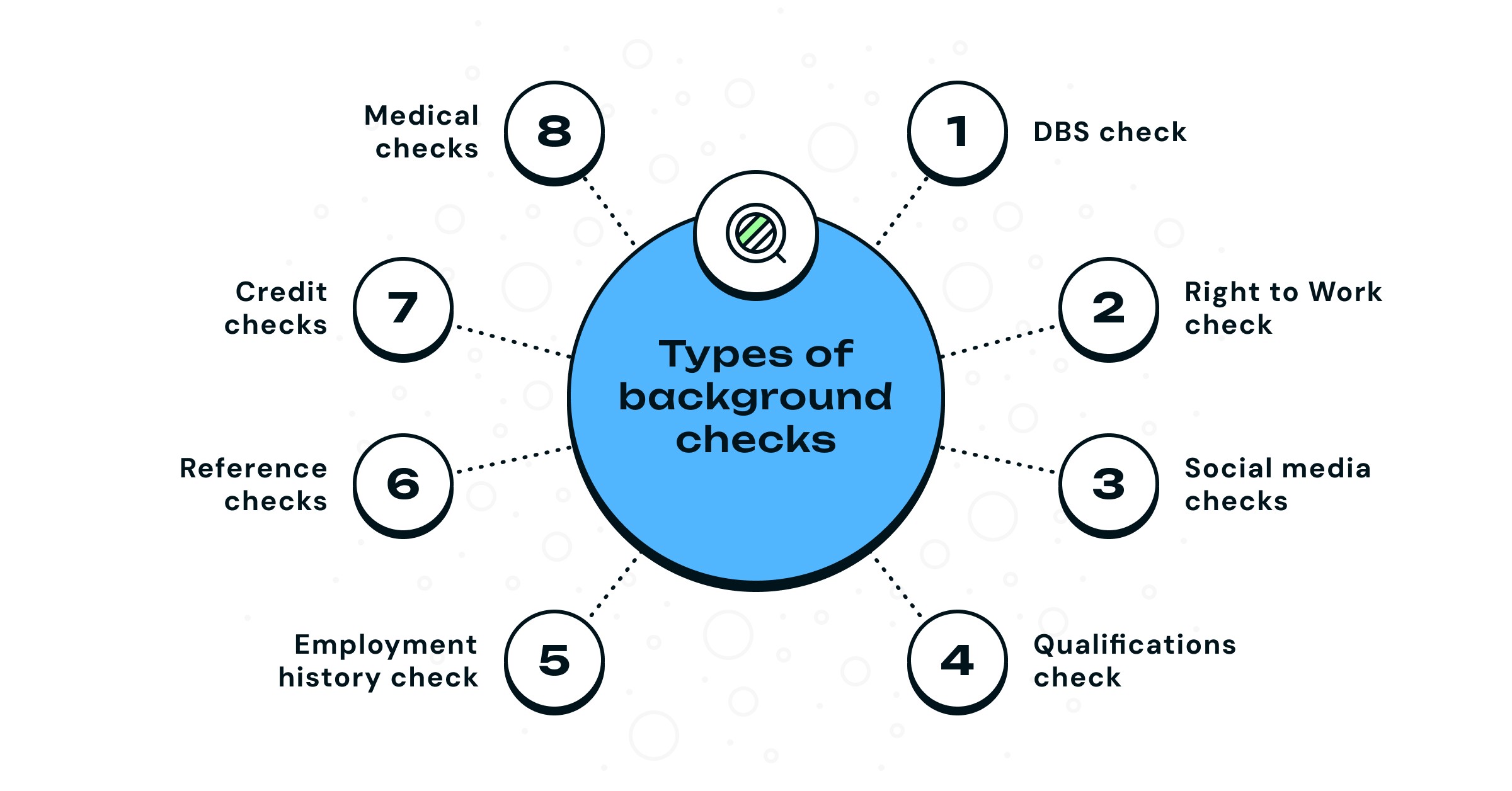
Background checks come in all shapes and sizes, and vary widely in their scope and the kind of information they present to the researcher. Here, we’ll walk through the key and common types of background check which are recommended for due diligence in the UK, including:
1. DBS (from Basic to Enhanced with Barred)
A DBS check is conducted by the Disclosure and Barring Service (DBS), and is a record of a person's criminal convictions and cautions.
Essential for sensitive industries, and for roles that involve working with children or vulnerable adults, a basic DBS check can be requested here and take around 14 days to process.
The Standard DBS check provides a copy of the person’s criminal record, known as ‘basic disclosure’, costs £21.50, and is available for those working in England or Wales.
An Enhanced DBS check, which costs £49.50, lists spent and unspent convictions, cautions, reprimands, and warnings from police databases that have not been filtered.
An Enhanced with Barred Lists check also costs £49.50, but this also reveals whether the applicant is listed on any DBS barred lists, meaning that they are prohibited from working with children or vulnerable adults.
2. Right to Work check
If you are employing someone who does not hold a UK passport, you must perform a Right to Work check to ensure that they are able to work within the UK.
This can be done by checking the candidate’s share code online, checking their original documents or using a provider that offers Identity Document Validation Technology (IDVT). Further guidance to the right to work process for employers can be found on the Gov.uk website here.
3. Social media checks
Social media checks are becoming more commonplace as part of pre-employment due diligence, and for good reason. 79% of the UK population use social media as of 2025, with platforms like Instagram, Facebook and LinkedIn now broadcasting the personal and working lives of millions of people on a public platform. As a result, social media can function as a useful gauge for employers to assess if the people they are hiring are suitable, and helps to identify candidates with potentially controversial, offensive or illegal content that an employer should be aware of.
Social media checks can also give a good sense of someone’s character, tone and personal interests outside of a work environment, which can be helpful in assessing if the person will be a good cultural fit.
A social media check, when used alone, will scan a user’s public profiles, posts and shared content. Some background check services provide social media screening as part of the check, cross-comparing this data with information kept on file relating to the person, such as a CV or references.
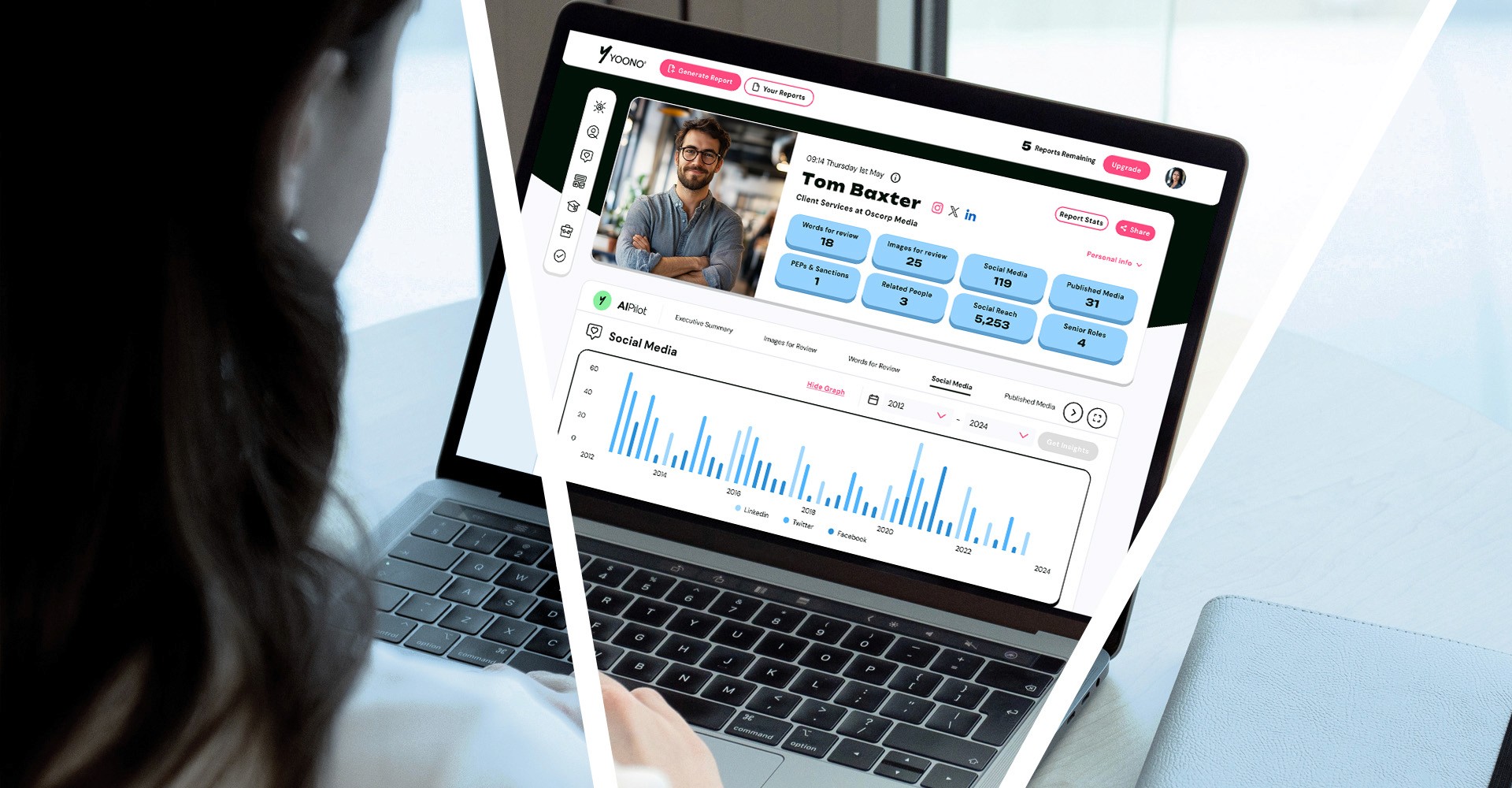
As an example, YOONO provides an over-arching background check that includes social media screening, as well as qualifications and employment history checks, see below, giving you the full picture of a candidate.
4. Qualifications check
In many industries it is exceptionally important that an individual being hired has the qualifications required by the organisation to conduct their role, in order to prevent qualification fraud. Industries like medicine, law and architecture are just some examples of sectors where this might be particularly important.
A qualifications check verifies an individual's academic or professional qualifications by checking what the candidate has provided against official records provided by institutions such as colleges, universities and awarding bodies. These types of background check reveal institution attended, dates of attendance, and details of specific qualifications, including examinations undertaken and grades achieved.
5. Employment history check
Every individual who has worked in the UK can request a copy of their employment history from HMRC, which can be given to an employer as proof of past employment.
Many background check providers also reveal an individual’s employment history, including where they have worked, duration and dates of employment and past job titles.
6. Reference checks
It is usual practice before or after a job offer has been made for the employer to get in touch with people who have employed, worked with or know a job candidate, in order to assess their suitability and character for a role.
Formal reference checks usually entail a written letter or email, signed by the referee, but reference checks can also be conducted over the phone. Normally, one or two references are required before the candidate is formally accepted (the phrase ‘subject to references’ is often used in the phrasing of a job offer).
7. Credit checks
Credit checks or financial checks are a different type of background check that focus almost exclusively on the individual’s financial record, and are particularly important for industries in which the person is likely to come into contact with money, such as financial services or banking.
A financial check may look for any record of bankruptcies, financial discrepancies, criminal action relating to fraud, or court orders like County Court Judgments (CCJs) and Individual Voluntary Arrangements (IVAs).
Some background check providers will provide financial checks, with services like YOONO also looking into a person’s company connections and related financial information, alongside other types of background check. It is also possible to use a DBS check (above) to see if someone has been involved in any criminal proceedings related to finances.
8. Medical checks
Medical checks are not common across most industries as part of the hiring process, as in most cases it contravenes data privacy legislation to assess someone’s medical condition or history. However, there are examples of job roles which specifically require medical checks in order to ascertain that the person is physically and mentally able to fulfil the job role.
The UK military, for example, require pre-employment medical checks to assess how the individual would cope with the physical and mental demands of operating within a warzone, and some industries require individuals to undertake specific medical checks, such as drug checks or mental health assessments.
Unless the job you are hiring for is specific to demanding physical work, it is unlikely you should need to request a medical check for candidates, and guidance given by the UK government states that health checks should only be required if:
it’s a legal requirement, for example eye tests for commercial vehicle drivers
the job requires it, for example because your insurers need health checks on cycle couriers
Background checks done differently
When there are so many different types of background check available, it can be difficult to know what type of background screening is going to be right for your business. Imagine instead one place to source all the important information you require, providing a thorough foundation on which to request additional specialist checks.
At YOONO, we aim to make the background screening process more trustworthy, by using data to standardise and maximise research results. Make a confident hiring choice with AI-powered search that brings you the widest-reaching and most relevant information about an individual. No guesswork, and no gaps.
YOONO searches publicly available data, meaning no candidate consent required. It’s quick, intuitive and provides you with the answers you need before you even meet. Assess their character, culture fit and credentials, as well as gain essential information about their employment history, educational background and company affiliations.
Everything in one place. Don’t take a shot in the dark, just make sure YOONO.